









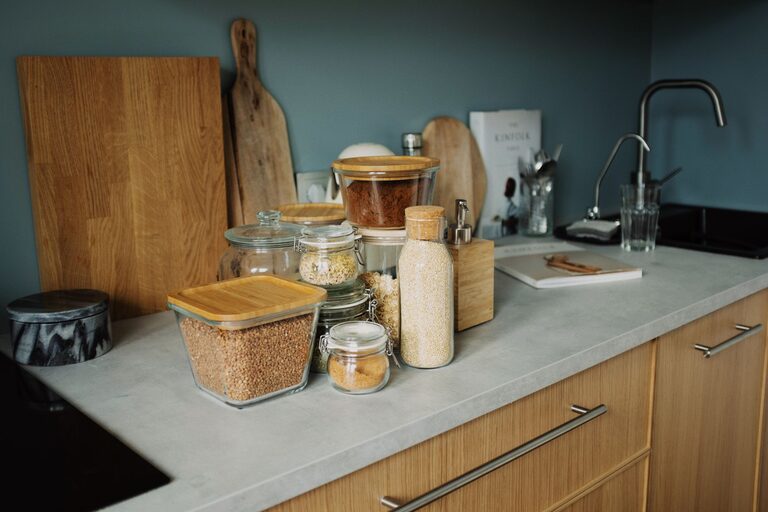
A clutter-free kitchen counter can make the entire room feel cleaner, calmer, and easier to use. When appliances, papers, dishes, and food containers pile up, even a large kitchen can feel cramped. The good news is that you do not need a complete remodel to create more open space. A few thoughtful decisions and simple daily habits can make a lasting difference.
The goal is not to remove everything from your counters. Instead, aim to keep only the items you use often and give everything else a clear home.
Start With a Complete Counter Reset
Before organizing your counters, remove everything from them. Place the items on a nearby table, island, or clean section of the floor. This gives you a clear view of how much you own and how much space you actually have.
As you sort, create four groups:
- Use daily: Items you reach for almost every day.
- Use occasionally: Items needed weekly, monthly, or seasonally.
- Belongs elsewhere: Items that were left on the counter but have another proper storage location.
- Remove or donate: Items you no longer use, need, or enjoy.
Wipe the counters while they are empty. A clean surface makes it easier to decide what deserves a place on it. It also creates a fresh starting point for your new system.
Choose What Deserves Counter Space
Counter space is valuable, so reserve it for items that support your daily routine. A coffee maker, toaster, or knife block may be worth keeping out if you use it frequently. An appliance used only a few times a year usually belongs in a cabinet, pantry, or storage area.
Ask yourself these questions about each item:
- Do I use this at least several times a week?
- Is it difficult or inconvenient to put away?
- Does leaving it out save meaningful time?
- Do I have enough room for it without creating visual clutter?
If an item is useful but not used often, store it nearby rather than on the counter. For example, a blender can go in an accessible lower cabinet, while a holiday baking tool can be stored on a higher shelf.
Create Zones for Common Kitchen Tasks
Organizing your counters by activity can make your kitchen more efficient. Instead of spreading items across every available surface, group related tools together.
Coffee and Tea Zone
Place your coffee maker, electric kettle, mugs, and frequently used supplies in one area. Use a small tray to contain sugar, tea bags, or a spoon. The tray creates a visual boundary and makes it easier to move the entire group when cleaning.
Cooking Zone
Keep frequently used cooking tools near the stove. A container for wooden spoons, a small cutting board, or a salt and pepper set may be practical here. Avoid filling this area with tools you rarely use.
Food Preparation Zone
Reserve a clear section near your cutting boards for chopping and mixing. This open space is often more useful than another appliance. If you prepare meals regularly, keeping this area clear can make cooking faster and less frustrating.
Cleaning Zone
Keep dish soap, a sponge, and a brush near the sink, but limit the number of items displayed. A small caddy can hold cleaning supplies neatly. Store extra sponges, cloths, and cleaning products under the sink.
Use Trays, Bins, and Containers
Small containers can prevent everyday items from spreading across the counter. A tray works well for oils, seasonings, or breakfast supplies. Baskets can hold fruit, bread, or items waiting to be put away.
Choose containers that fit your counter and match your habits. A container that is too small will overflow, while one that is too large may take up unnecessary space. Look for designs that are easy to clean and simple to carry.
Try not to use containers as a way to hide clutter. If a basket becomes a catchall for mail, receipts, keys, and random objects, it will only make the problem less visible. Give each container a specific purpose and remove anything that does not belong.
Make Better Use of Cabinets and Drawers
Cluttered counters are often a sign that cabinets and drawers are not being used efficiently. Take a few minutes to review the storage areas closest to your counters.
Consider these simple improvements:
- Move everyday dishes to an easy-to-reach shelf.
- Use drawer dividers for utensils and cooking tools.
- Install a shelf riser to create a second level inside a cabinet.
- Store cutting boards vertically with a simple divider.
- Keep pot lids organized with a rack or file holder.
- Use stackable containers to make better use of tall shelves.
You do not need to buy an organizer for every cabinet. First remove expired food, duplicates, and items you no longer use. Creating extra space may solve the problem without adding more products.
Find a Home for Paper and Small Items
Mail, receipts, school papers, chargers, and keys can quickly take over kitchen counters. Set up a small drop zone away from your main food preparation area. This could be a wall-mounted organizer, a drawer, or a basket near the entrance.
Create simple categories such as:
- Action needed
- To file
- To recycle
- Items to take elsewhere
Process papers regularly instead of letting them build up. A few minutes each evening can prevent a large pile from forming.
Small items such as rubber bands, batteries, and takeout menus should also have assigned storage locations. If something does not have a home, it will probably return to the counter.
Manage Small Appliances
Small appliances are some of the biggest sources of counter clutter. Start by identifying which ones you use most often. Keep only those appliances that fit comfortably in your available space.
For appliances you use occasionally, choose storage based on convenience. Place heavier items in lower cabinets and lighter items on higher shelves. If lifting an appliance is difficult, consider storing it on a pullout shelf or in an easy-access cabinet.
Avoid creating a crowded “appliance row.” Even useful appliances can make the kitchen feel busy when placed shoulder to shoulder. Leave enough open space between important work areas so you can prepare food comfortably.
Build a Five-Minute Reset Routine
A clutter-free counter is easier to maintain when tidying becomes part of your daily routine. At the end of the day, set a timer for five minutes and complete these steps:
- Return dishes, food, and tools to their proper locations.
- Put papers and personal items in their designated drop zone.
- Move appliances back into place.
- Wipe the counters and sink area.
- Check for anything that belongs in another room.
This short reset prevents small messes from becoming overwhelming. You can also make it a habit to put an item away immediately after using it, especially when the item is easy to store.
Keep the System Simple
The best organization system is one you can maintain without much effort. If putting something away requires moving several other items, it is likely to end up on the counter. Store frequently used items in convenient places and avoid overfilling cabinets.
Review your counters once a month. Remove items that have slowly accumulated and return them to their proper homes. Seasonal changes are also a good time to adjust your setup. For example, baking supplies may deserve easier access during the holidays, while outdoor dining items may be more useful during warmer months.
A clutter-free kitchen does not need to look perfect every day. The aim is to create enough open space for cooking, cleaning, and everyday life. By choosing what stays out, improving storage, and following a quick reset routine, you can keep your counters clear with less effort.