









Clothing can last much longer when it is cleaned, dried, stored, and repaired with care. Small habits, such as washing items less often or using the right water temperature, can help protect fabric, color, shape, and fasteners.
Caring for clothes also makes it easier to build a practical wardrobe. When garments remain in good condition, you can wear them more often and replace them less frequently. Use the following tips to keep your favorite pieces looking and feeling their best.
Read the Care Label First
The care label is the best starting point for understanding how to clean a garment. It may recommend machine washing, hand washing, dry cleaning, air drying, or a specific water temperature.
Before washing a new item, check the label for instructions about:
– Water temperature
– Washing cycle
– Bleach use
– Drying method
– Ironing temperature
– Professional cleaning
Follow the most delicate instruction when a garment contains more than one type of fabric. For example, a shirt made from a blend may need gentler care than a sturdy cotton item. If the label is missing, treat the garment cautiously by using cold water, a gentle cycle, and air drying.
Wash Clothes Only When Needed
Washing removes dirt and odors, but repeated washing can also cause fading, shrinking, stretching, and fabric wear. Not every item needs to be washed after one use.
Items such as jeans, sweaters, jackets, and overshirts can often be worn several times if they are not stained, sweaty, or visibly dirty. Air them out between uses and spot-clean small marks instead of washing the entire garment.
Clothes that touch the skin directly, including underwear, socks, workout clothing, and many shirts, usually need more frequent washing. Use your judgment based on the garment’s material and how it was worn.
Sort Laundry Carefully
Sorting laundry by color is important, but it is not the only consideration. Separating clothing by fabric type and weight can also reduce damage.
Try sorting clothes into groups such as:
– Light colors
– Dark colors
– Bright or highly colored items
– Towels and heavy fabrics
– Delicate items
– Clothing with zippers or hooks
Wash new dark or brightly colored garments separately the first few times because excess dye may transfer to other items. Keep heavy towels and denim away from lightweight shirts and delicate fabrics. Rough materials can rub against softer clothes and create pilling or small tears.
Use Cold or Cool Water
Cold or cool water is suitable for many everyday loads and can help reduce fading and shrinkage. It is also gentler on fibers than hot water.
Use warmer water only when the care label recommends it or when a garment needs extra cleaning. Always follow the product instructions for detergent and avoid adding more than necessary. Too much detergent can leave a residue that makes fabric feel stiff or attracts more dirt.
For delicate items, choose a mild detergent designed for gentle washing. Avoid using bleach unless the care label specifically allows it, as bleach can weaken fibers and change colors.
Prepare Clothes Before Washing
A few minutes of preparation can prevent common laundry damage.
Before placing clothes in the washer:
– Empty all pockets
– Close zippers
– Fasten hooks and buttons
– Turn printed garments inside out
– Tie loose drawstrings
– Place delicate items in mesh laundry bags
– Remove belts and detachable accessories
Turning dark clothing and printed shirts inside out helps limit rubbing against other items. Mesh bags are useful for bras, lightweight garments, and small pieces that could become tangled or stretched.
Do not overload the washing machine. Clothes need room to move through the water. An overcrowded drum can leave items less clean and increase wrinkling and friction.
Choose Gentle Washing Settings
Use the gentlest cycle that will adequately clean the load. Delicate fabrics may need a hand-wash or gentle setting, while sturdy towels and cotton items can usually handle a regular cycle.
Avoid washing delicate clothes with items that have sharp hardware, rough seams, or heavy fabric. When possible, group similar materials together.
If a garment has a stain, treat it before washing. Apply a suitable stain remover to a hidden area first to check for color changes. Blot stains rather than rubbing them aggressively, which can push the mark deeper into the fabric or damage the surface.
Dry Clothes With Care
Drying methods can affect clothing just as much as washing. High heat may shrink some fabrics, weaken elastic, and cause colors to fade.
Air drying is often the gentlest option. Hang or lay items according to their shape and fabric:
– Lay sweaters flat to prevent stretching
– Hang shirts on suitable hangers
– Use padded or wide hangers for delicate materials
– Dry heavy items over a rack instead of a thin hanger
– Keep clothing away from direct, strong sunlight when fading is a concern
Before hanging a knit garment, gently reshape it while it is damp. Do not hang wet sweaters or heavy, stretchy items by the shoulders because their weight can distort the shape.
If you use a dryer, select a lower heat setting and remove clothes while they are slightly damp when possible. Clean the lint filter after every load to support proper airflow and safer operation.
Prevent Wrinkles and Pilling
Remove clothes from the washer or dryer soon after the cycle ends. Shaking each item gently and smoothing seams before drying can reduce wrinkles.
To limit pilling, wash soft garments inside out and avoid mixing them with rough fabrics. Small pills can be removed with a fabric shaver or a clothing comb. Work slowly and use light pressure to avoid cutting the fabric.
Avoid pulling pills off by hand. This can remove fibers and create weak spots.
Store Clothes Properly
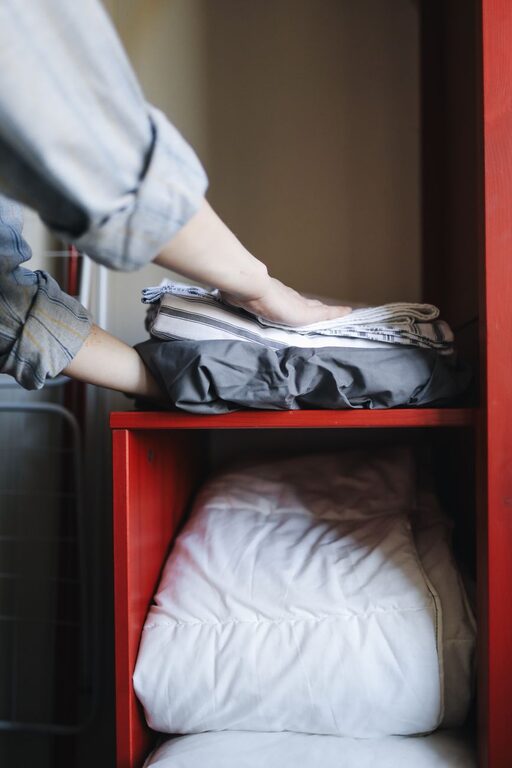
Good storage protects clothing from dust, moisture, insects, and unnecessary stretching. Make sure garments are clean and fully dry before putting them away. Storing a worn or damp item can lead to odors and stains that become harder to remove.
Fold heavy sweaters, knits, and stretchy clothing instead of hanging them. Use hangers for structured items such as jackets, button-down shirts, and trousers. Leave a little space between garments so air can circulate and clothes are easier to remove without pulling.
For seasonal storage, use breathable fabric containers when possible. Avoid packing clothes tightly in damp areas. Before storing, check that all pockets are empty and repair small problems such as loose buttons or open seams.
Handle Stains and Repairs Promptly
Small problems are easier to fix when they are noticed early. Check clothing regularly for loose threads, missing buttons, small holes, and broken fasteners.
Useful basic repairs include:
– Reattaching buttons
– Securing loose hems
– Replacing simple hooks
– Mending small tears
– Reinforcing weak seams
Keep a small repair kit with matching or neutral thread, needles, spare buttons, scissors, and safety pins. If a repair is beyond your skill level, a tailor or clothing repair service may be able to restore the item.
Treat stains as soon as practical, but avoid using a harsh product without checking the fabric first. Never place a stained item in a hot dryer until the stain has been removed, since heat can make some stains more difficult to treat.
Refresh Your Wardrobe Between Uses
Not every garment needs a full wash to feel fresh. Hang clothing in a well-ventilated area after wearing it and allow it to air out before returning it to the closet.
A clothes brush can remove surface dust, lint, and hair from coats and structured garments. A steamer may help relax wrinkles, but check the care label before using heat or moisture. For items that should not be steamed, use gentle airing and careful folding instead.
By washing less often, choosing gentle settings, drying thoughtfully, and repairing small issues promptly, you can help your clothes remain comfortable and presentable for longer. These simple habits also make laundry more manageable and help you get greater value from every item in your wardrobe.